When it comes to cricket on television, I can't help but come over all misty-eyed. Sentiment and tradition form a strong part of the fabric of the game, and it's no different when it comes down to the sport's broadcasting history.
There's no doubt about it, I owe a lot of my love for cricket to Channel 4, and its perfect marriage with the historic 2005 Ashes series. The DVD boxset of those highlights is one my most treasured sporting possessions. I would even go as far as to say that I class it as 'sporting memorabilia', so therefore it peeves me when I come across stacks of them for sale in my local pound store, disregarded alongside Action Man rip-offs and low-life batteries.
However, in sport as in life, things move on and England Test matches, both home and away, are now monopolised by Sky Sports. Like it or not, that's just the way it is.
So how does Sky's coverage compare to that masterful effort five years ago? Pretty well, is the honest answer. Having only had access to their satellite coverage for the past couple of months, the hotly-anticipated 2010 Ashes series is my first taste of their live output. I was keen to see how Sky's team went about their business, for commentators and pundits in cricket have a much more important role than those in football, for example. That's just the nature of the game.
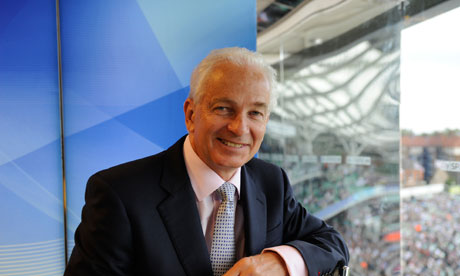
You certaintly can't argue against the distinction of their line-up. The programme is fronted by former England captain and 'They Think It's All Over' legend David Gower (above), a calm on-screen presence. The line of ex-skippers doesn't end there, though. Nasser Hussain, Michael Atherton and of course, Sir Ian Botham, have all led their country before taking to the mic. Former coach David 'Bumble' Lloyd makes up the English contingent, with Michael Holding and Shane Warne giving the coverage the balance requires.
That's not to say the output isn't positively pro-England. Hussain and Botham in particular remain fiercely patriotic in all circumstances; the former probably because of the years of pain suffered as player against the old enemy, the latter because of somewhat the opposite. It's a safe bet that the coverage of the home broadcaster, Channel 9, is similarly biased, so it's fair to let it be.
Where Channel Four really shone in was with its commentary. You can have as many graphics and stat packs as you like, but viewers always remember the great moments from Nicholas, Benaud and co. Although, in my eyes, nothing will ever match that, Sky's cohort have found the key balance between analysis and banter that draws and maintains the watcher's interest.
The commentary box lay-out is ideal. Two seats for the main speakers, sandwiched between a chair for the brilliantly-named resident statto, Benedict Bermange, and the 'Third Man', a seat for a designated team member to provide in-depth analysis from as the play unfolds, a role akin to that of Simon Hughes from five years ago.
The styles of commentary? Cambridge-educated Atherton speaks with the quiet authority that one would expect, and he has that journalistic eye. Hussain is just as astute, and speaks with vim about past experiences that really help the viewer, 10,000 miles away in snowy England, to understand the pressure-cooker environment of Down Under.
David Lloyd is the archetypal joker-in-the-pack. Having gained hero status with the British public through his antics in the commentary box and via Twitter, his reputation for tomfoolery often masks the fact that his cricketing brain is as sharp as any. With Shane Warne joining the pack, Lloyd has a merry-andrew partner with whom to entertain viewers and embarrass colleagues.
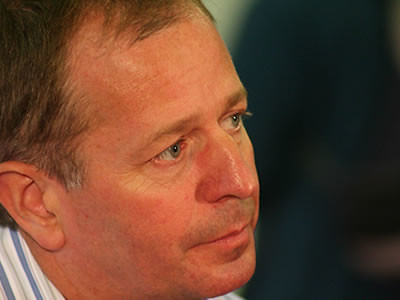
Sir Ian Botham (below) stands out a bit more, for other reasons. The former all-rounder speaks with assurance, and maybe a little arrogance, and demands the respect that being a giant of English cricket should deserve. I always feel Botham, for all his worth, is a little on the outside of the circle. Whether that's because his fellow commentators feel in his shadow, I'm not sure. Nevertheless, he still adds to the party.
That leaves Michael Holding, an unbiased observer caught in the storm of Ashes rivalry. The team is saturated with former batsman, so to have the perspective of one the world's greatest ever fast bowlers gives Sky's coverage extra brownie points. Nicknamed 'Whispering Death' for his gliding run-up to the crease, Holding takes a similarly ushered approach to commentary, and to hear his voice among the boisterous crossfire is a relaxing tonic.
So, all in all, they do a fine job. The coverage is enjoyable, insightful and interesting, and if the series itself lives up the that great summer of 2005, then my motherly-protection of past glories may ease. I wouldn't put money on it though.
Monday, 29 November 2010
Tuesday, 23 November 2010
The Football Sleep Show
It's almost a routine nowadays. Saturdays for me consist of a lay-in, Football Focus, Soccer Saturday, an evening interlude for those weekend chores, before settling down for Match of the Day at night.
As you can imagine, spending a day enraptured by television coverage of football can be very tiring, mainly because of the paining stress suffered as Paul Merson tries to describe a five-yard pass by Barry Ferguson over on Channel 455. Later on, as MOTD draws to a conclusion close to midnight, the eyelids droop, the concentration wavers, and the dreamy world of 'bed' is calling.
No, I tell myself. For as most of you are aware, the final fixture of the day is yet to kick-off. BBC's 'Football League Show', a late-night offering showing all the goals from England's proper football divisions, appeared on our screens at the beginning of the 2009/10 season. ITV had relinquished the rights to show Football League highlights, and the public hoped that the BBC would stamp its traditional authority on a format somewhat neglected by its rival broadcaster.
Despite my love of the lower leagues, however, the 'Football League Show' often struggles to awake me from my dormancy. A programme which starts close to midnight should aim to capture viewers with a tantalising introduction, and keep them watching for the ensuing 80 minutes through the power of lively scripting, fast-paced debate and colourful personalities.
If the Beeb's idea of such an introduction is to have host Manish Bhasin reading his autocue from a raised landing above the studio, then the imagination of the show's producer has to be questioned. If you're going to have a landing, why not excite the viewers (who have probably already abandoned their cocoa) by getting Bhasin a playground slide? In that way, he can thrust himself down it, land in his seat and engage in that ever-so gentle banter with sidekick and pundit, Steve Claridge.
I don't know, maybe that does sound a bit silly. I'm adamant that the show does need livening up, however. Lizzie Greenwood-Hughes, bless her, tries her damnest. Employed by the programme purely to act with unrealistic enthusiasm over the opinions of us, the watchers, she tries desperately to give the impression that she's snowed under with football fans ranting and raving about their clubs.
The sad truth, most probably, is that 'John', a 'Cardiff fan' who 'believes that Craig Bellamy is good', is John the floor manager who couldn't give a toss about anyone's talent as a footballer and probably wants to go home, achieve full intoxication through alcohol and moan over the banality of it all.
Claridge himself is as dull and infuriating as most 'experts'. Upon his introduction from Bhasin, the former journeyman striker proceeds to stare into the camera, like he's lost his essential programme notes (surely script?) and is praying they appear before him in the form of autocue. As the show trundles along, Claridge has an unerring knack of wheeling out the same points, week-in, week-out, in that husky South London accent.
There is a glimmer of light in this late-night drone, though. Mark Clemmit, a regular voice on 5live Sport, is sent out every week for two reports: one on a matchday featuring a team in the news, and another, so-called 'Potted History', review of a club's past. 'Clem' has an infectious presenting style, just sitting nicely on the precipice of 'entertaining' to 'annoying', and his seemingly 'matey' relationships with managers and players alike give the viewer a good impression of the people inside the game.
Although Clemmit's efforts do add a little spice later in the show, the programme as a whole has become monotonous. Obviously all viewers are tuning in for the football itself, but when a programme gives as much time to analysis as 'The Football League Show', it must strive for vibrancy.
Maybe that's what people want from their late night television though? A programme of such flatness that it sends them speedily into their weekend slumber. For me, however, as Manish signs off with his 'weatherman' look at the league tables, I head to bed feeling the Beeb could do so much more.
As you can imagine, spending a day enraptured by television coverage of football can be very tiring, mainly because of the paining stress suffered as Paul Merson tries to describe a five-yard pass by Barry Ferguson over on Channel 455. Later on, as MOTD draws to a conclusion close to midnight, the eyelids droop, the concentration wavers, and the dreamy world of 'bed' is calling.
No, I tell myself. For as most of you are aware, the final fixture of the day is yet to kick-off. BBC's 'Football League Show', a late-night offering showing all the goals from England's proper football divisions, appeared on our screens at the beginning of the 2009/10 season. ITV had relinquished the rights to show Football League highlights, and the public hoped that the BBC would stamp its traditional authority on a format somewhat neglected by its rival broadcaster.
Despite my love of the lower leagues, however, the 'Football League Show' often struggles to awake me from my dormancy. A programme which starts close to midnight should aim to capture viewers with a tantalising introduction, and keep them watching for the ensuing 80 minutes through the power of lively scripting, fast-paced debate and colourful personalities.
If the Beeb's idea of such an introduction is to have host Manish Bhasin reading his autocue from a raised landing above the studio, then the imagination of the show's producer has to be questioned. If you're going to have a landing, why not excite the viewers (who have probably already abandoned their cocoa) by getting Bhasin a playground slide? In that way, he can thrust himself down it, land in his seat and engage in that ever-so gentle banter with sidekick and pundit, Steve Claridge.
I don't know, maybe that does sound a bit silly. I'm adamant that the show does need livening up, however. Lizzie Greenwood-Hughes, bless her, tries her damnest. Employed by the programme purely to act with unrealistic enthusiasm over the opinions of us, the watchers, she tries desperately to give the impression that she's snowed under with football fans ranting and raving about their clubs.
The sad truth, most probably, is that 'John', a 'Cardiff fan' who 'believes that Craig Bellamy is good', is John the floor manager who couldn't give a toss about anyone's talent as a footballer and probably wants to go home, achieve full intoxication through alcohol and moan over the banality of it all.
Claridge himself is as dull and infuriating as most 'experts'. Upon his introduction from Bhasin, the former journeyman striker proceeds to stare into the camera, like he's lost his essential programme notes (surely script?) and is praying they appear before him in the form of autocue. As the show trundles along, Claridge has an unerring knack of wheeling out the same points, week-in, week-out, in that husky South London accent.
There is a glimmer of light in this late-night drone, though. Mark Clemmit, a regular voice on 5live Sport, is sent out every week for two reports: one on a matchday featuring a team in the news, and another, so-called 'Potted History', review of a club's past. 'Clem' has an infectious presenting style, just sitting nicely on the precipice of 'entertaining' to 'annoying', and his seemingly 'matey' relationships with managers and players alike give the viewer a good impression of the people inside the game.
Although Clemmit's efforts do add a little spice later in the show, the programme as a whole has become monotonous. Obviously all viewers are tuning in for the football itself, but when a programme gives as much time to analysis as 'The Football League Show', it must strive for vibrancy.
Maybe that's what people want from their late night television though? A programme of such flatness that it sends them speedily into their weekend slumber. For me, however, as Manish signs off with his 'weatherman' look at the league tables, I head to bed feeling the Beeb could do so much more.
Monday, 15 November 2010
Forget Red Bull; the Beeb is the most successful team in F1
On Sunday, Red Bull's Sebastian Vettel was crowned the youngest ever Formula One world champion, bringing to a conclusion one of the most entertaining seasons in the sport's history. British fans have been taken through it every step of the way by the BBC, and The Scrutineer casts an eye at their coverage from final race of the year in Abu Dhabi.
For sheer sporting theatre, it doesn't get more intense. Entering the final race weekend of a pulsating season, Formula One still had the opportunity to crown four drivers as its champion. Like all great storylines, there had to be a fitting finale; but for fans of the world's most glamorous sport, whatever the standard of finish, it wouldn't do justice to such a memorable year.
2010 was a season where F1 demonstrated each and every one of its endearing qualities: mesmerising driving, intense rivalry, controversy in abundance, on and off-track drama and wheel-to-wheel racing. When such a season unfolds, the quality of the television coverage becomes that little bit more important. Thankfully for British fans, the Beeb delivered.
Ever since it was announced in early 2008 that Auntie had regained the rights to F1 coverage from ITV, I couldn't help but be excited. Despite the latter's coverage always being adequate and often being insightful, I had dreamed of the sport's return to its original home. For all of ITV's efforts, sport on the BBC has always had the edge. Having seen football, cricket, tennis and snooker enjoy superb coverage on our flagship broadcaster, the prospect of my favourite sport filling the airtime over summer weekends was mouth-watering.
They haven't disappointed. Entering the Abu Dhabi weekend, I was eager to see what gems the production team had mustered for the season finale. But for all of 21st century television technology, you still need that human touch for the optimum viewing experience. The likeable triumvirate of Jake Humphrey, David Coulthard and Eddie Jordan provide just that.
Humphrey, fresh-faced and eager in the typical Beeb mould, fronts the coverage. It's a role he's certainly grown into, meandering through the show with a successful blend of assured knowledge and boyish humour. Unlike his predecessors at ITV, Humphrey has the balance of affability and authority that is key in a role such as this. F1 is a subject evidently close to his heart, but his conscious effort to remain 'the link man' rather than spouting opinions left, right and centre is admirable.
That job falls to his broadcasting henchmen. 'DC' and 'EJ', as Humphrey affectionately calls them, are as diametrically opposite in personality as is possible between two human beings. If you were to travel to the deepest lands of Scandinavia and introduce the people to an Amazonian native from Brazil, they would share more common ground than these two.
Coulthard is ever the diplomat. Considered in his delivery, he is still struggling to shake off the management-speak style that rubs off on you after eight years with McLaren. Self-conscious yet confident, the Scot is the man Humphrey turns to when in need of some calm assurance.
Then there's Jordan. Controversial, excitable, bouncing Eddie Jordan. After 13 years of entertaining the paddock as chief of the vibrant Jordan GP, the colourful Irishman turned his hand to punditry. It always seemed the natural next step.
Their on-screen relationship has become the cornerstone of BBC's coverage. In the pre-race programme in Abu Dhabi, DC and EJ were dispatched to Red Bull and Ferrari respectively to try and sniff out some gossip before the action got underway. Coulthard politely enquired about the availability of a team member for interview; Jordan, brash and fearless, jumped about with excitement as he interrogated the Scuderia's PR guru Luca Colajanni.
There are more strings to the BBC bow, of course. Trusted former ITV employee Ted Kravitz joined Lee McKenzie as pitlane reporters, and each bring their own qualities to the party. Commentator Jonathan Legard didn't have big boots to fill with ITV's enthusiastic but generally unpopular James Allen, but his in-depth knowledge keeps viewers informed as the race unfolds.
The real jewel in the crown for the BBC, however, is summariser and grid-walker Martin Brundle. Using experience gained from 12 years racing in the sport, Brundle made his name as sidekick to Murray Walker in the ITV commentary box. Since then, he has become a master of his trade, able to impart his considerable knowledge in a way easily understandable to the average viewer. The term 'summariser' doesn't really do his job justice; for many years, Brundle has conveyed essential information with concision and expertise, and helped many an F1 fan, myself included, along the way.
Of course, what Brundle is most famous for is his 'grid-walks', where he spends ten minutes striding the busy grid, interviewing whomever he can get hold of. He confessed that his Abu Dhabi walk was the 'maddest' in all 14 years of doing them. In what made hilarious viewing, Brundle took Jordan with him, and proceeded in negotiating a track so crammed with photographers, team members, celebrities and Arabian royalty that it resembled raceday at Monaco.
That was just one of a few show highlights, the most memorable of which was an excellent feature showing Sir Stiring Moss and Murray Walker reviewing the season. To hear Walker, a man who is proud to have watched every Grand Prix since 1950, say that 2010 was the most exciting season he's seen just goes to prove that all the hype is entirely justified.
To finish, I'll leave you with a clip to the BBC's post-race Forum, which includes some brilliant scenes as Humphrey, Jordan and Coulthard struggle to get an interview with the newly-crowned world champion. It's well worth a watch.
For sheer sporting theatre, it doesn't get more intense. Entering the final race weekend of a pulsating season, Formula One still had the opportunity to crown four drivers as its champion. Like all great storylines, there had to be a fitting finale; but for fans of the world's most glamorous sport, whatever the standard of finish, it wouldn't do justice to such a memorable year.
2010 was a season where F1 demonstrated each and every one of its endearing qualities: mesmerising driving, intense rivalry, controversy in abundance, on and off-track drama and wheel-to-wheel racing. When such a season unfolds, the quality of the television coverage becomes that little bit more important. Thankfully for British fans, the Beeb delivered.
Ever since it was announced in early 2008 that Auntie had regained the rights to F1 coverage from ITV, I couldn't help but be excited. Despite the latter's coverage always being adequate and often being insightful, I had dreamed of the sport's return to its original home. For all of ITV's efforts, sport on the BBC has always had the edge. Having seen football, cricket, tennis and snooker enjoy superb coverage on our flagship broadcaster, the prospect of my favourite sport filling the airtime over summer weekends was mouth-watering.
They haven't disappointed. Entering the Abu Dhabi weekend, I was eager to see what gems the production team had mustered for the season finale. But for all of 21st century television technology, you still need that human touch for the optimum viewing experience. The likeable triumvirate of Jake Humphrey, David Coulthard and Eddie Jordan provide just that.
Humphrey, fresh-faced and eager in the typical Beeb mould, fronts the coverage. It's a role he's certainly grown into, meandering through the show with a successful blend of assured knowledge and boyish humour. Unlike his predecessors at ITV, Humphrey has the balance of affability and authority that is key in a role such as this. F1 is a subject evidently close to his heart, but his conscious effort to remain 'the link man' rather than spouting opinions left, right and centre is admirable.
That job falls to his broadcasting henchmen. 'DC' and 'EJ', as Humphrey affectionately calls them, are as diametrically opposite in personality as is possible between two human beings. If you were to travel to the deepest lands of Scandinavia and introduce the people to an Amazonian native from Brazil, they would share more common ground than these two.
Coulthard is ever the diplomat. Considered in his delivery, he is still struggling to shake off the management-speak style that rubs off on you after eight years with McLaren. Self-conscious yet confident, the Scot is the man Humphrey turns to when in need of some calm assurance.
Then there's Jordan. Controversial, excitable, bouncing Eddie Jordan. After 13 years of entertaining the paddock as chief of the vibrant Jordan GP, the colourful Irishman turned his hand to punditry. It always seemed the natural next step.
Their on-screen relationship has become the cornerstone of BBC's coverage. In the pre-race programme in Abu Dhabi, DC and EJ were dispatched to Red Bull and Ferrari respectively to try and sniff out some gossip before the action got underway. Coulthard politely enquired about the availability of a team member for interview; Jordan, brash and fearless, jumped about with excitement as he interrogated the Scuderia's PR guru Luca Colajanni.
There are more strings to the BBC bow, of course. Trusted former ITV employee Ted Kravitz joined Lee McKenzie as pitlane reporters, and each bring their own qualities to the party. Commentator Jonathan Legard didn't have big boots to fill with ITV's enthusiastic but generally unpopular James Allen, but his in-depth knowledge keeps viewers informed as the race unfolds.
The real jewel in the crown for the BBC, however, is summariser and grid-walker Martin Brundle. Using experience gained from 12 years racing in the sport, Brundle made his name as sidekick to Murray Walker in the ITV commentary box. Since then, he has become a master of his trade, able to impart his considerable knowledge in a way easily understandable to the average viewer. The term 'summariser' doesn't really do his job justice; for many years, Brundle has conveyed essential information with concision and expertise, and helped many an F1 fan, myself included, along the way.
Of course, what Brundle is most famous for is his 'grid-walks', where he spends ten minutes striding the busy grid, interviewing whomever he can get hold of. He confessed that his Abu Dhabi walk was the 'maddest' in all 14 years of doing them. In what made hilarious viewing, Brundle took Jordan with him, and proceeded in negotiating a track so crammed with photographers, team members, celebrities and Arabian royalty that it resembled raceday at Monaco.
That was just one of a few show highlights, the most memorable of which was an excellent feature showing Sir Stiring Moss and Murray Walker reviewing the season. To hear Walker, a man who is proud to have watched every Grand Prix since 1950, say that 2010 was the most exciting season he's seen just goes to prove that all the hype is entirely justified.
To finish, I'll leave you with a clip to the BBC's post-race Forum, which includes some brilliant scenes as Humphrey, Jordan and Coulthard struggle to get an interview with the newly-crowned world champion. It's well worth a watch.
Tuesday, 2 November 2010
Tell me why I don't actually mind Mondays
'The Boomtown Rats' famously proclaimed the opposite in their hit single back in 1979, and few are placed to criticise the wisdom of Bob Geldof in such matters. However, thanks to Sky Sports newly-branded and typically swanky Monday Night Football coverage, everyone's least favourite day of the week has become a tad more entertaining. Despite some irksome elements, it's off to a good start.
2010/11 saw the broadcaster recapture the rights for Monday top division fixtures from ESPN, and in classic fashion, Sky have pulled out all the stops to flog their newest asset. Just like their sister Super Sunday 'brand', the blockbuster movie-like trailers flood the advertising space almost as much as bicep-enhancement specials on The Shopping Channel.
This US-influenced format is evident still as the show begins, with the evergreen Richard Keys and his partner in crime, Andy Gray, transmitting from a room draped in so many shiny gadgets that it could be mistaken for an ITV game-show studio.
Keys gets the ball rolling by introducing the previous weekend's action. With an hour to go until the live match kicks off , there's plenty of time for him to test the limits of Gray's rage with his inciting questions. On a weekend like this, with Nani scoring the sort of goal that gets Gray shaking with excitement, there's no danger of running out of content. Like a boy on Christmas Day, he obsesses over his favourite toy, the 'SkyPad', to take viewers through every possible match scenario by circling, looping and moving men around like players on a new-age Subbuteo board.
Over twenty minutes into the programme, Keys finally introduces the match they're all there for; Blackpool v West Bromwich Albion. A quick matey chat with co-commentator Clarke Carlisle, a footballer whose journalistic stock his risen exponentially by virtue of softening Jeff Stelling on Countdown, preceded a great feature on Premier League strikers and interviews with both managers.
For this, Keys and Gray leave their 'SkyPad' seats and stand like worshippers to an unnecessarily large screen, which bears Roberto Di Matteo and Ian Holloway in such a way that you can't help but compare it to that episode of The Apprentice where Alan Sugar addressed his charges via a screen in an iMax cinema. For all this visual hilarity, however, Keys and Gray have worked together for so long that they rub along brilliantly, and they see the show through to the match with their well-honed balance of patter and professionalism.
Half-time comes with plenty to talk about; West Brom have had two men sent-off and conceded a penalty, and these are the sort of incidents that brings Gray into his element. Fifteen minutes is hardly enough time for the acid-tongued Scotsman, but post-match air time allows him to wrap things up with characteristic authority.
Although Sky's insistence on doing everything 'big-style' (to use another American term) does tend to override the content focus of their programming, Monday Night Football is an enjoyable watch nonetheless. Keys and Gray have got their game down to a tee, there's no doubt about that.
2010/11 saw the broadcaster recapture the rights for Monday top division fixtures from ESPN, and in classic fashion, Sky have pulled out all the stops to flog their newest asset. Just like their sister Super Sunday 'brand', the blockbuster movie-like trailers flood the advertising space almost as much as bicep-enhancement specials on The Shopping Channel.
This US-influenced format is evident still as the show begins, with the evergreen Richard Keys and his partner in crime, Andy Gray, transmitting from a room draped in so many shiny gadgets that it could be mistaken for an ITV game-show studio.
Keys gets the ball rolling by introducing the previous weekend's action. With an hour to go until the live match kicks off , there's plenty of time for him to test the limits of Gray's rage with his inciting questions. On a weekend like this, with Nani scoring the sort of goal that gets Gray shaking with excitement, there's no danger of running out of content. Like a boy on Christmas Day, he obsesses over his favourite toy, the 'SkyPad', to take viewers through every possible match scenario by circling, looping and moving men around like players on a new-age Subbuteo board.
Over twenty minutes into the programme, Keys finally introduces the match they're all there for; Blackpool v West Bromwich Albion. A quick matey chat with co-commentator Clarke Carlisle, a footballer whose journalistic stock his risen exponentially by virtue of softening Jeff Stelling on Countdown, preceded a great feature on Premier League strikers and interviews with both managers.
For this, Keys and Gray leave their 'SkyPad' seats and stand like worshippers to an unnecessarily large screen, which bears Roberto Di Matteo and Ian Holloway in such a way that you can't help but compare it to that episode of The Apprentice where Alan Sugar addressed his charges via a screen in an iMax cinema. For all this visual hilarity, however, Keys and Gray have worked together for so long that they rub along brilliantly, and they see the show through to the match with their well-honed balance of patter and professionalism.
Half-time comes with plenty to talk about; West Brom have had two men sent-off and conceded a penalty, and these are the sort of incidents that brings Gray into his element. Fifteen minutes is hardly enough time for the acid-tongued Scotsman, but post-match air time allows him to wrap things up with characteristic authority.
Although Sky's insistence on doing everything 'big-style' (to use another American term) does tend to override the content focus of their programming, Monday Night Football is an enjoyable watch nonetheless. Keys and Gray have got their game down to a tee, there's no doubt about that.
Subscribe to:
Comments (Atom)